About the Cover
Résumé
Artist Statement:
Land relations are broken in Mi’kma’ki. As a settler carrying many generations of colonial entanglement here, I’m compelled by Donna Haraway (2016)[1] provocation to “make trouble, to stir up potent response to devastating events, as well as to settle troubled waters and rebuild quiet places” (p. 1).
In 1753, a group of “foreign protestant” men, including my earliest ancestors here, were invited to a playing card draw at Grand Parade in Halifax. Marked to correspond to a parcel of land-as-property in E’se’katik, each card selected dealt a family out of indentured servitude to the crown and into a settler land relation. This colonial sleight of hand also betrayed the newly signed 1752 Peace and Friendship Treaty, which required Mi’kmaq consent for any new settlements.
I’ve been troubling this game-changing moment with a research-creation in the form of a storied card deck. These cards work to shuffle and re-story ancestral legacies, revealing how “pioneer” bodies were used to not only physically dispossess Mi’kmaq from their lands, but also to embody and reproduce the broken land relations key to fortifying Britain’s colonial claim.
My dissertation is grounded in relational commitments forged through organizing in allyship with Mi’kmaw-led resurgence and shared struggles for just and liveable futures. By creating portals to explore and share our intimate stories on these lands, I hope to manifest possibilities to build new solidarities that might help tilt settlers like me towards relational repair in the spirit of the treaties.
The Research Project:
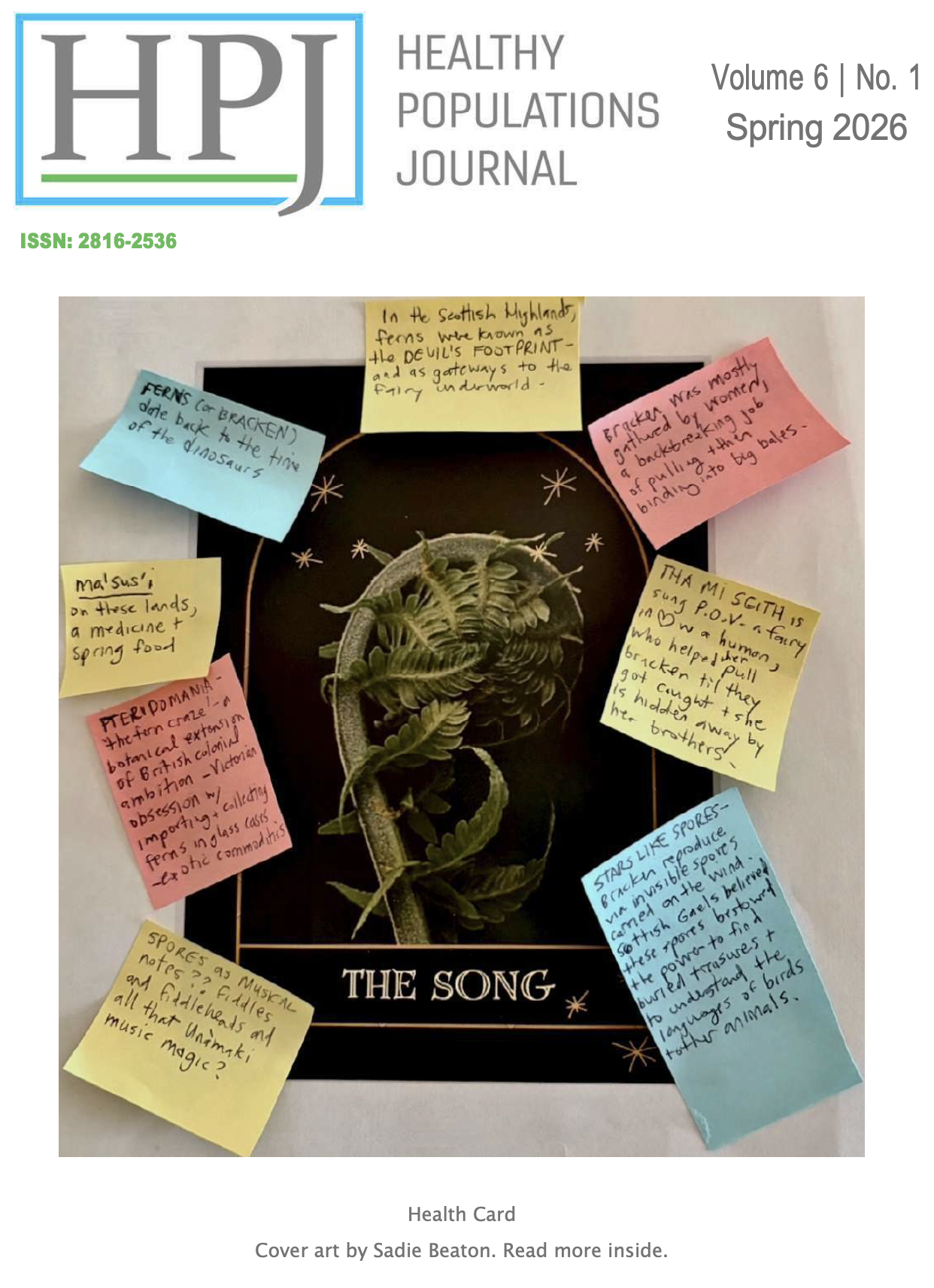
"The Song" is the card I've most recently written, which loosely corresponds to The Star in a traditional Tarot deck. The Star often represents a moment of healing after violent turmoil, inviting the cardholder into a receptive state of calm and divine guidance. The story draws on questions I am exploring in my patrilineal lineage of "Mabou Pioneers" who fled to Unama'ki after the violence of British colonial "pacification" in their Highland Scottish homelands.
While the bulk of the "House of Cards" project reckons with the violent process that conscripted my “pioneer” ancestors into dispossessing Mi'kmaq from their lands and lifeways, this card wonders whether syncretic medicine may still be gleaned from the Gaelic fairy laments that were carried here and continue to be passed down through generations.
The song woven into this card is one I grew up hearing, and invokes a deep grief of separation from land and kin, where "Often, my love and I,/ Were in the misty glens,/ Listening to the sweet choir of the grove, /Singing in the corpulent forest." It also bemoans their proletarianization into the colonial drudgery of agrarian capitalism, as the chorus complains, "I am tired and I am alone, /Forever cutting the bracken."
This micro-fiction is a sliver of a longer research-creation story arc that combines liberatory archival research, Mi'kmaw teachings, critical autoethnography, and anti-colonial re-storying practices. The card deck reveals a time-traveling narrative involving a Park Patrol Officer named Ray, a bunch of beavers, Mi'kmaw land defenders, a possessed photocopier, and a settler environmental scientist and single parent named Rachel who is having a bit of a mental breakdown in the woods. Together, these cards invite settlers to explore and trouble their own stories of familial settlement here as part of efforts to reshuffle the "house of cards" that undergird Canada's colonial claims.
In alignment with HPJ's thematic interest in challenging taken-for-granted ways of understanding health and healing, this card explores the role that both ancestral art practices and research creation might play in offering pathways to relational repair in alignment with the blueprint for living well together here laid out in the Peace and Friendship treaties.
[1] Haraway, D. (2016). Staying with the trouble. Duke University Press.
Publié-e
Numéro
Rubrique
Licence
© Healthy Populations Journal 2026

Cette œuvre est sous licence Creative Commons Attribution - Pas d'Utilisation Commerciale 4.0 International.
The journal aims to reduce barriers to publishing and sharing research and inequalities to accessing information.This journal provides immediate open access to its content on the principle that making research freely available to the public supports a greater global exchange of knowledge. The open-access nature of the journal means that there will be no charge for authors or readers to use the journal. The journal has a Creative Commons Attribution Non-Commercial (CCBYNC) attribution which allows the author (and others) to share and distribute their full-text article in other public domains, such as Google Scholar or Research Gate.