Nymphée (1893), de J.-H. Rosny, et le merveilleux scientifique : les débuts de la science-fiction moderne
Abstract
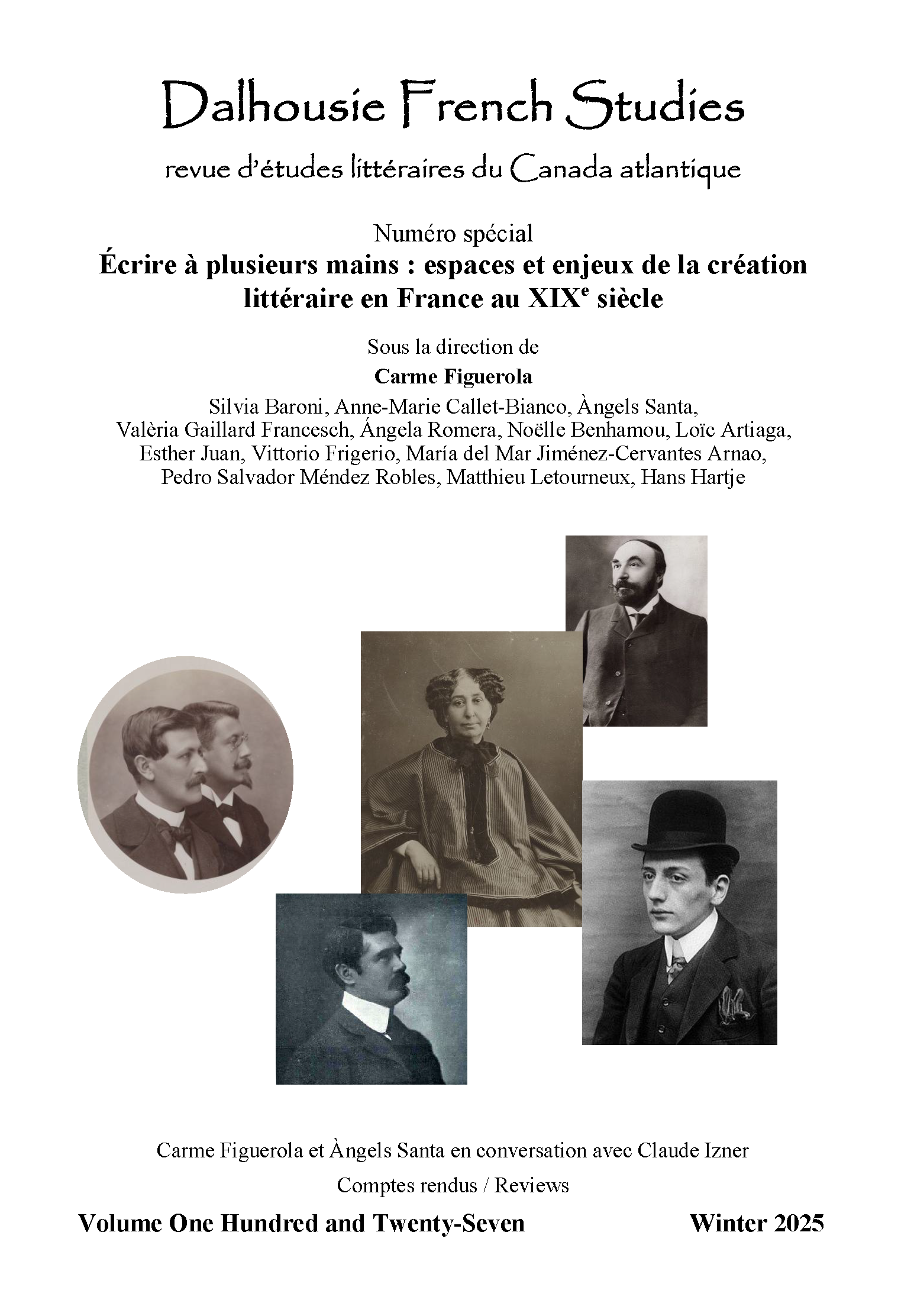
Under the joint pen name J.-H. Rosny, the Belgian brothers Joseph-Henri-Honoré Boëx (Rosny Aîné, 1856–1940) and Séraphin Justin-François Boëx (Rosny Jeune, 1859–1948) wrote in tandem from 1887 to 1908, until their split, prompted by Le Journal’s announcement of the serial publication of Marthe Baraquin, accompanied by a photograph of the elder brother alone. In the heart of the Belle Époque, their writing stood at the crossroads of science and imagination, giving rise to what was then called the “scientific marvelous”, a precursor of modern science fiction. The Rosny brothers thus form the link between Jules Verne and H. G. Wells. Rosny’s science fiction takes the form of prehistoric, contemporary, and futuristic narratives that chart humanity’s fate through a Darwinian lens. Nymphée is a nouvelle first published in a journal in 1893 and then in book form in 1909; it exemplifies the contemporary strain: in 1891, a young physician-naturalist, Robert Farville, accompanies an expedition to the Amur region on the borders of Russia and China, where he discovers previously unknown lacustrine humanoid civilizations. In this article, we analyse how this adventure narrative anticipates modern science fiction while offering an engaged perspective on issues such as the critique of colonialism and the sketching of an eco-narrative in which a communal, frugal amphibian society lives in symbiosis with nature.